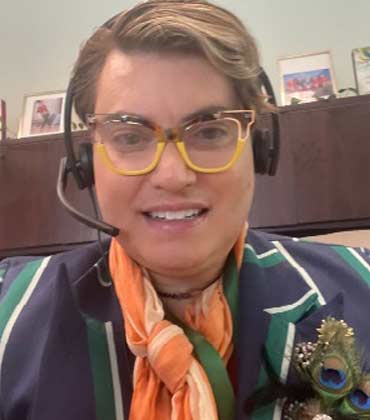
Ken Hogue is a dedicated healthcare executive specializing in optimization and organizational transformation to industry-leading standards. He excels in fostering collaborative relationships and creating a positive work environment, leading by example to drive success.
Through this article, Ken Hogue shares his insights on overcoming challenges like remote work and regulatory changes through servant leadership and team engagement. Emphasizing continuous improvement with automation and AI, the executive significantly contributed to UHS’s growth, transforming it into a top-performing revenue cycle system focused on staff development and retention.
My Interest in healthcare, came at the young age of 15 years old, when working in a work-study program in high school, where I worked with the Military and in a doctor’s office 10-15 hours per week while, my dad was stationed in Kings Bay, GA In the Military. After graduating high school, I worked with the ARC of Pennsylvania while attending college and assisted with grant writing, and part-time TSS worker in the Patient Care Field for individuals with Mental or Developmental Health issues, to become more independent and an advocate for the services in which they needed to reach their highest level of independence.
Healthcare is continuously evolving, and we have no choice but to embrace change, as leaders and help simplify this for our teams and patients
After losing my grandmother and another very close family member, who also was a career mentor in January 2020. I was ready to heal with a new start leaving Rochester NY and NYC Job Market Area and going to Binghamton NY, to UHS. I started with the organization on March 17th of 2020, knowing that they were going to EPIC as their health EMR, and wanted to take all of my past experiences in the revenue cycle to help for a smooth and very successful go-live in the midst of a national pandemic. From the first day stepping foot in the UHS revenue cycle, I knew I was at the right place. A place that needed me, and that would be a lot of valued work to ensure the revenue cycle, would grow to a best-in-class revenue cycle system. I wanted to give it everything I had professionally, to help the community in which I moved to, became part of, to ensure that we could be a partner through the health system by revenue cycle optimization, workflows, challenges and changes. Which is exactly what I did. From my first day, it was about building relationships, advocating for the revenue cycle and sharing the large picture of how important the revenue cycle is especially during a national pandemic.
Billing and coding regulations, during the pandemic, were changing so fast at first. It was hard for the management/ leadership team to keep up, and keep staff engaged and focused. When you have a large diverse team, which has a very in-person culture. To go almost fully remote, was a very large cultural change. That did not happen overnight, it took persistence, rolling up my sleeve and communicating through webex, zoom, etc. To ensure that we had routine touch points with teams, where they felt valued, and still received the communication they needed and devoted resources to a dedicated online training team for our revenue cycle team members.
Fast forward to today, I have been promoted 2 times within my almost 5 years at UHS. Going from Director to Senior Director, now Chief of Revenue Cycle for the system. Without my team, I would not be successful or have reached the level I am today. Healthcare Revenue cycles to be best in class must define career ladders, have flexible work environments that the hybrid model is here to stay, and still need to be able to offer fully remote as well as in-office positions as well. Not a single only work model. Staying engaged and leading a revenue cycle takes a servant-leader approach. Management teams need to hear their staff’s needs and many times put the team’s larger goal first, and this often requires putting yourself second not first. This creates a place where staff want to work, talk in a positive way about where they work and forms a health ecosystem where people want to receive care. By doing this, we have become a top-performing EPIC EHR organization.
UHS has grown upwards of 17 percent since the start of the Pandemic, to an over $1B a year integrated healthcare system. With the growth, we have been able to retain staff, become a place where people want to come and revenue cycle professionals are valued. We are quickly becoming a best-in-class well-known revenue cycle health system. From our highest vacancy factor point of 18 percent vacancy to now being at around 4 percent across the entire revenue cycle. This was done by teaching a servant leadership approach, precise and multi-communication delivery methods. A very proud moment to share is that we have brought all our coding in-house again, creating career ladders outpatient coders going to inpatient and growing our next analyst and supervisor in-house. Allowing us to foster a culture where our dedicated staff is promoted to the next chapter in their career. This has been extremely successful; we have gone from a 20 percent coding staff vacancy to less than 5 open positions in a team of almost 150 staff.
The way of the future or the next 5 years in healthcare is that of continued automation and artificial intelligence. We are partnering with Local colleges, schools and those coming out of school for clinical and non-clinical roles. Many new finance college graduates do not know what the revenue cycle is. In a career that I love, we must advocate and teach not preach why it is important that folks know of the opportunities and new technology evolving within the field. Automation and AI, rather if be RPA or real intuitive AI, require a commitment to process analytics and excellence. As insurance and compliance regulations change. Folks must remember that you need to monitor processes daily, and weekly and then when errors or automated successes start to slip. This is where further review and analytics must be done, in order to make updates as they occur to keep for a proficient healthcare ecosystem. I encourage folks to regularly participate in panels, podcasts and round tables, to continuously learn and evaluate if your processes are staying best in class Healthcare is continuously evolving, and we have no choice but to embrace change, as leaders and help simplify this for our teams and patients.